

Kitchen countertop trends are shifting fast in 2024 as homeowners choose between quartz and granite for durability, maintenance, and style. If you are remodeling or building a new kitchen, understanding these trends will help you make smarter, longer-lasting choices that fit your budget and taste.
Key Takeaways
- Quartz is now the most popular kitchen countertop material, with 40% of new customized installs, thanks to modern looks and easy maintenance.
- Granite remains valued for its natural look and heat resistance, but requires more upkeep than quartz.
- Sustainability, safety, and regional price differences are major emerging factors shaping 2024 kitchen countertop trends.
- What’s Driving Kitchen Countertop Trends in 2024?
- How to Choose and Install Your Kitchen Countertops: Step-by-Step Guide
- Advanced Analysis & Common Pitfalls: What Most Countertop Buyers Miss
- Conclusion
- Frequently Asked Questions
What’s Driving Kitchen Countertop Trends in 2024?
Style preferences, ease of maintenance, and rising environmental awareness are all shaping how homeowners select kitchen countertops this year. The latest research shows that demand for engineered quartz is surging, with the global quartz countertop market valued at USD 6.83 billion in 2024, expected to grow at a strong 5.4% annual rate. North America now accounts for 35% of this demand. Meanwhile, granite continues to claim a sizeable share—especially for its visual appeal and heat resistance—but is growing more slowly than quartz.
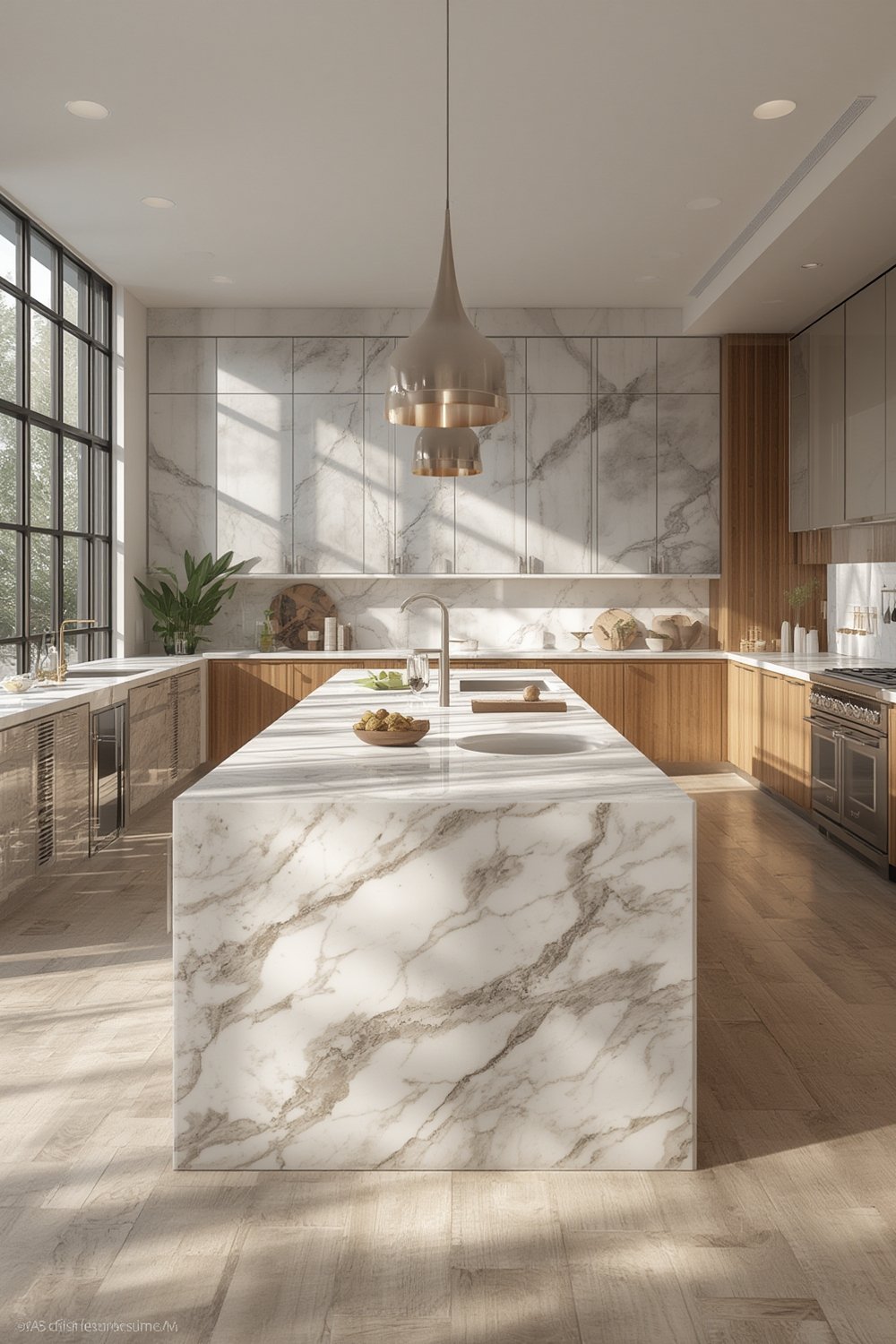
Why the shift? Quartz offers consistency, endless colors, and no required sealing. It matches perfectly with the clean, uncluttered lines seen in modern modular kitchen and open-plan designs. Market data from Houzz shows 72% of homeowners now want customized countertops, with quartz accounting for 40% of those. That said, granite’s natural character and ability to blend into both traditional and modern settings means it’s still highly valued for certain aesthetics. Both materials are increasingly scrutinized for sustainability, hygiene, and price transparency—new priorities in 2024 remodeling projects.
How to Choose and Install Your Kitchen Countertops: Step-by-Step Guide
-
Assess Your Lifestyle and Needs.
If your kitchen endures heavy daily use, quartz is hard to beat for resilience and minimal upkeep. Granite is a smart choice if you want a more organic look and are comfortable with some yearly maintenance (sealing).
-
Define Your Budget Upfront.
Research shows the cost of both quartz and granite varies widely depending on product line, color, and where you live. Very high-end granite (rare imports) can exceed quartz costs, but entry-level granite is often competitive.
-
Pick Your Style: Color, Pattern, Profile.
Modern kitchens favor whites, light grays, and subtle veining—quartz thrives here, offering predictable patterns. If you crave bold, one-of-a-kind stone, granite’s unique slabs will appeal. Be sure to explore current edge profiles: straight, eased, and waterfall edges are all trending.
-
Get Quotes and Compare Regional Options.
Most buyers skip this step and overpay. Always request multiple quotes—locally and regionally. If you’re considering DIY installation vs. hiring a pro, factor in complex cuts, sink cutouts, and heavy lifting—mistakes here are costly. For more on managing large renovation costs, see our proven renovation planning guide.
-
Plan for Sustainability and Health.
If eco-credentials matter, check for recycled quartz content or granite sourced from responsible quarries. Ask suppliers about production emissions and recycling options at end-of-life. Europe already leads in sustainable quartz. For improving overall home air quality, review our eco-friendly paint tips.
-
Prepare Your Kitchen for Installation.
Clear all surfaces, disconnect plumbing, and ensure measurements match final fabrication documents. A tiny error means costly delays. For more on maximizing kitchen function and space, try our home organization solutions.
-
Schedule and Supervise Installation.
Arrange for installation on a day you’re present—inspect seams, finish quality, and confirm all edges meet your expectations before signing off.
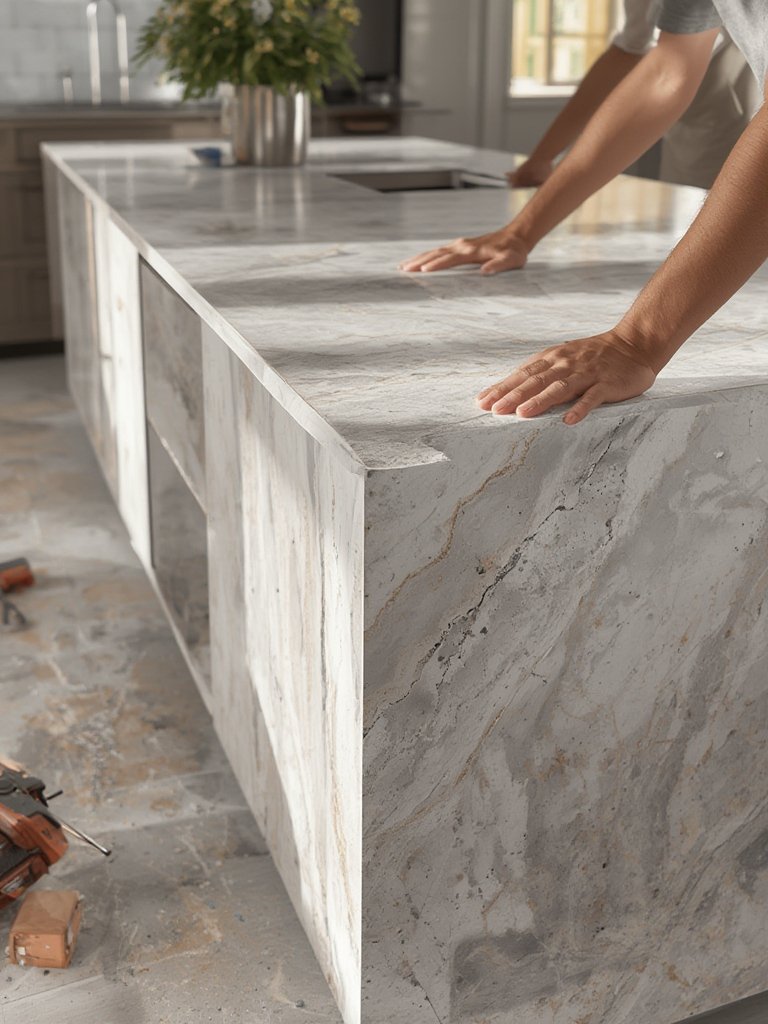
Choosing and installing your new countertop shouldn’t be a leap of faith. Review real user experiences, verify supplier warranties, and don’t forget to ask about food safety certifications and exact maintenance instructions for both quartz and granite. Being thorough now pays off for years to come.
Advanced Analysis & Common Pitfalls: What Most Countertop Buyers Miss
Even experienced renovators get tripped up by a few key issues when following kitchen countertop trends. Here’s what to watch for, based on new market research and overlooked homeowner reports:
| Factor | Quartz | Granite |
|---|---|---|
| Durability Issues | Resists chipping, staining, and bacteria, but can discolor with high heat exposure. Not for hot pans directly from stove. | Excellent heat and scratch resistance, but may need resealing to avoid stains and bacteria in pores. |
| Maintenance | Low—routine cleaning with soap and water; no sealing needed. | Requires periodic sealing (every 1-2 years). Spot cleaning and immediate spill removal recommended. |
| Design Flexibility | Highly customizable—consistent colors/patterns, suited for minimalist and modern kitchens. | Unique natural patterns—each slab is different. Best for statement or traditional looks. |
| Environmental Impact | Leading brands offer recycled content; production energy can be high depending on resin content. | Quarried stone with supply/sustainability concerns; intensive extraction process impacts supply chain. |
| Price Variation | Wide range, but high-end colors may be costly and vary by region. | Entry level is affordable, but rare/imported granite slabs are among the most expensive options. |
| Safety & Hygiene | Non-porous, naturally resistant to bacteria—ideal for food prep. | Requires sealing to achieve food-safe, low-porosity status—maintenance is key. |
- Unexplored Price Differences: Most online advice skips local price swings. Quartz and granite pricing can change dramatically by state or even city. Always ask local suppliers for up-to-date quotes before deciding.
- Maintenance Surprises: Some homeowners underestimate granite’s sealing needs or quartz’s vulnerability to hot pans. Both realities can affect the appearance and lifespan of your investment.
- Lack of Real-World Complaint Data: In 2024, little data is published about user-reported failures. Check forums such as Houzz or Reddit for honest feedback about stain issues, scratches, or color fading before buying.
- Sustainability Blind Spots: While companies publicize sustainable sourcing, details about carbon emissions, water use, and end-of-life recycling are too rare. Granite’s supply can be unpredictable due to quarry output. For a greener home, see our eco-friendly paint guide and look for countertop brands with third-party green certifications.
- Compatibility with Smart Kitchens: If you’re integrating smart home technology or modular space-saving layouts (modular furniture ideas), quartz’s consistency helps with precision installs. Granite may need extra fabrication time due to its irregularity.
Conclusion
Quartz continues to accelerate as the most in-demand choice in 2024 kitchen countertop trends, driven by customization, minimal upkeep, and clean looks. Granite retains classic appeal and superior heat resistance but comes with more regular maintenance. Before making a decision, carefully compare local prices, request in-person slab inspections, and weigh each option’s sustainability. For more expert-level remodeling ideas to transform every corner of your home, explore our collection of proven home decor ideas.
Ready to take your kitchen to the next level? Stay up to date on kitchen countertop trends by subscribing, or connect with our team for a free quote and personalized advice today.
Frequently Asked Questions
Is quartz really more durable than granite?
Quartz is exceptionally hard and non-porous, so it resists staining and scratching in typical kitchen use. However, granite is more heat-resistant and can outlast quartz under high temperatures. Both are long-lasting but excel in different areas.
Which material is more eco-friendly—quartz or granite?
Both quartz and granite have pros and cons for sustainability. Some quartz brands now use recycled materials, while granite is a natural stone but requires quarrying. Full carbon and water footprint data is still rare for both materials.
How often do I need to seal my granite countertops?
To maintain stain resistance and food safety, granite should be sealed approximately every 1–2 years, or whenever water no longer beads on the surface. Quartz does not require sealing.
Can I put hot pans directly on quartz or granite?
Granite tolerates hot pans better, though sudden extreme heat can cause it to crack. Quartz can discolor or crack if exposed to very high temperatures, so always use trivets.
Do quartz and granite countertops support smart kitchen features?
Yes. Both work well with modern smart home systems. Quartz’s uniform dimensions make it ideal for seamless integration in modular or tech-enabled kitchens.

[…] a deeper dive into countertop ROI and home upgrade strategies, explore our latest countertop trends & cost guide and our large scale renovation planning […]
[…] lighting all boost a kitchen’s wow factor and ROI. For more inspiration, check out our comparison of quartz vs granite or explore the complete 2024 home renovation planning guide to tie it all […]