

### Blog Post:
Solar water heaters are one of the simplest ways to lower household energy bills and boost your home’s eco-friendly credentials in 2024. As utility prices rise and incentives expand, more homeowners worldwide are asking: Is solar hot water finally worth the upgrade?
Key Takeaways
- Solar water heaters occupy a growing share of the $2.9 billion global market, with residential use driving adoption in North America, Europe, and Asia-Pacific.
- Incentives and rebates can lower upfront costs, but payback periods and maintenance costs are still highly variable and depend on region and household needs.
- Integration with whole-home solar and smart systems remains an overlooked frontier—most solutions lack real climate data and IoT support.
- What Are Solar Water Heaters and Why Should You Care?
- Step-by-Step Guide: How to Get the Most from Solar Water Heaters
- Advanced Analysis & Common Pitfalls
- Conclusion
- FAQ
What Are Solar Water Heaters and Why Should You Care?
Solar water heaters use rooftop collectors to capture sunlight and directly heat water for your taps, showers, and appliances. Unlike photovoltaic (PV) systems that generate electricity, these systems specialize in one job—delivering hot water with minimal ongoing costs and no direct emissions.
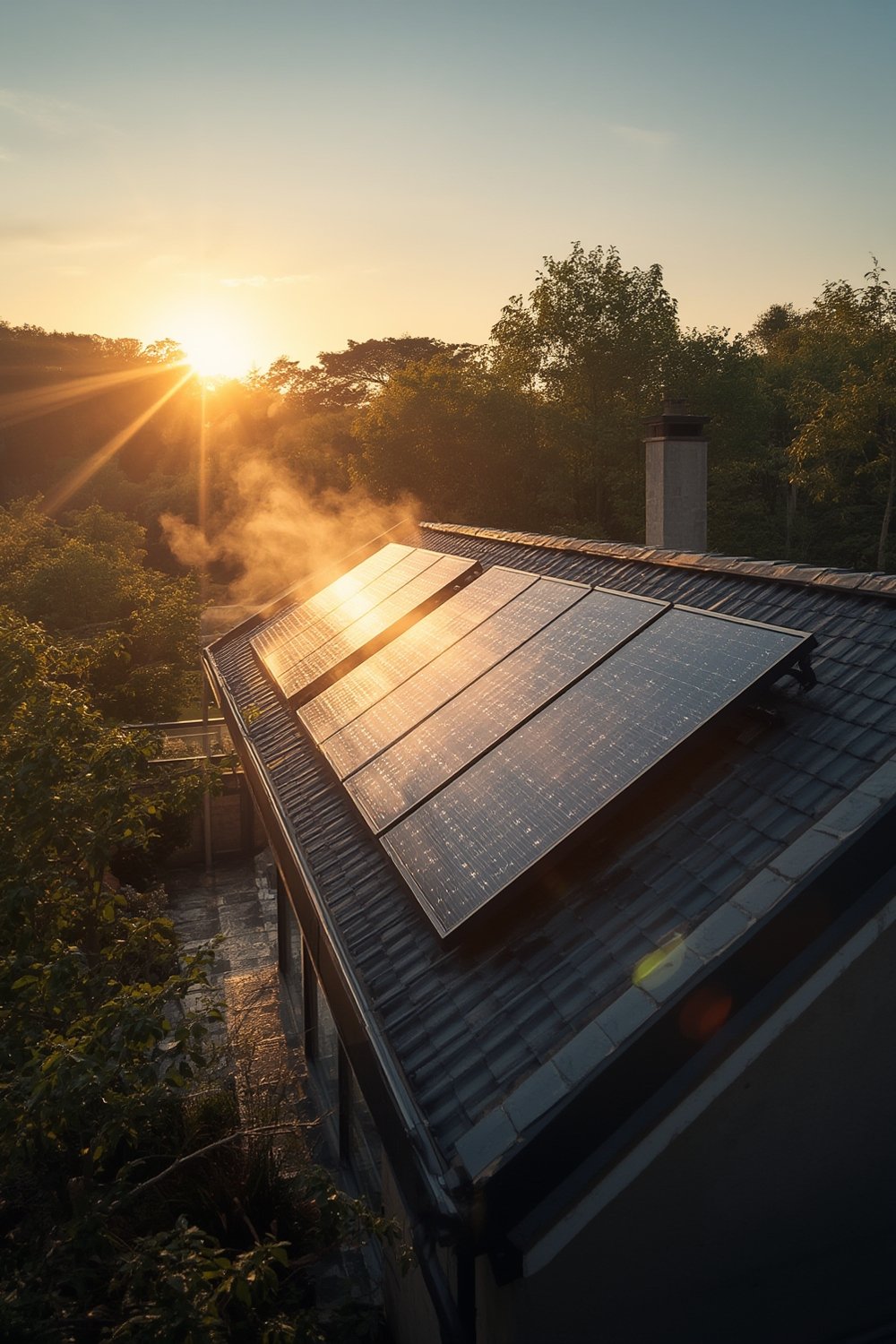
In 2024, market data estimates value the global solar water heater market at roughly $2.9 billion, with other sources placing it as high as $4.8 billion. Residential installation leads the way, especially in areas like North America (40% market share) and Asia-Pacific (fastest growth at 8% CAGR). China’s adoption is surging due to national mandates and subsidies, with households dominating new installations (source). While exact home adoption rates are hard to pin down, demand continues to climb thanks to rising energy prices and increased sustainability awareness (source).
Unlike typical gas or electric water heaters, solar water heaters can drastically reduce your reliance on fossil fuels. They’re particularly effective in sunny climates or regions with good government incentives, such as the U.S., India, and China. Programs range from tax credits in the U.S. to direct cash rebates in Taiwan, depending on where you live (source).
Even better, pairing a solar water heater with existing home solar upgrades—like the steps found in our energy-efficient upgrades guide—can further amplify your home’s long-term savings and sustainability.
Step-by-Step Guide: How to Get the Most from Solar Water Heaters
Ready to take control of your hot water expenses? Use this actionable blueprint to evaluate, purchase, and maximize a solar water heater for your home:
- Assess Your Household Hot Water Use
Calculate average daily water consumption per person. This determines system size and collector area—crucial for achieving realistic savings. - Evaluate Your Climate and Roof Orientation
Solar water heaters thrive in sunny regions with minimal winter freezes. Roofs should face south (in the northern hemisphere) and have sufficient space for collectors—open shade-free areas work best. - Research Local Incentives and Codes
Look up regional rebates, tax credits, and permit requirements before you shop. These can make a major dent in upfront costs. - Choose the Best System Type
- Active systems use pumps for circulating water—best for mild climates.
- Passive systems rely on gravity and require less maintenance—best in areas with minimal freeze risk.
- Get Multiple Contractor Quotes
Choose installers with experience on similar roof types, and ask about included warranties, system monitoring, and post-installation support. - Plan for Maintenance
Set reminders for annual inspections (check for leaks, insulation degradation, and limescale buildup). - Monitor Your System Post-Installation
Track hot water production, energy bills, and temperature consistency. Maintain a log for warranty or incentive documentation.
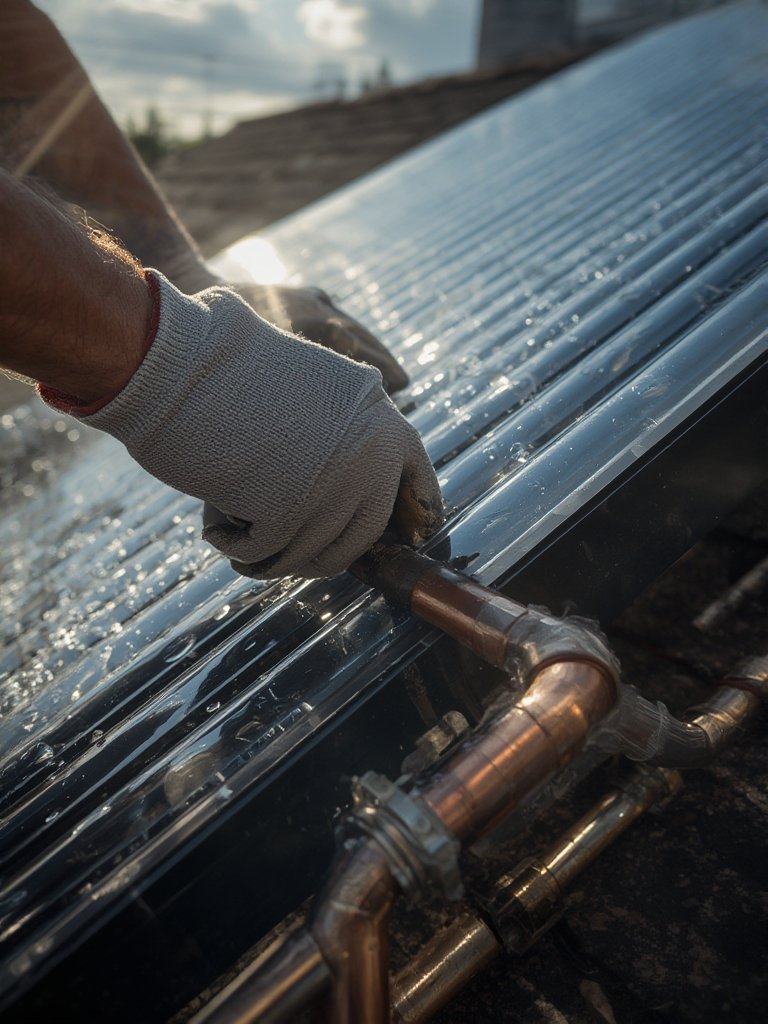
Need even more energy savings? Combine your water heating upgrade with efficiency steps like a smart home organization redesign or integrating a connected thermostat and lighting. These efforts work even better together.
Advanced Analysis & Common Pitfalls
Solar water heaters aren’t a one-size-fits-all solution. Here are real challenges—and how to sidestep them for the best outcome:
- Variable Upfront & Ongoing Costs: Exact costs depend on region, local labor, system size, and applicable incentives. There are no standardized payback periods; recoup time depends on your household’s hot water use and utility rates.
- Maintenance Realities: While many systems are low-maintenance, issues like scale buildup, pump/liner wear, or leaks can arise. Annual inspections aren’t optional—neglect rapidly erodes performance and warranty coverage.
- No Universal Performance Guarantee: Solar output varies with local climate, roof shading, and orientation. Cold climates or heavily overcast areas may need more collector area or hybrid system support, and results may still disappoint without proper analysis.
- Limited Smart Home Integration: Mainstream models rarely offer built-in IoT controls or detailed usage reporting. You’ll need add-on monitoring or home automation integrations for truly “smart” hot water.
- Integration Challenges: Roof space is often limited. Trying to fit solar water heaters with PV panels or other systems requires a careful site plan to prevent crowding and shading.
| Factor | Solar Water Heaters | PV Solar Panels |
|---|---|---|
| Purpose | Heat water directly | Generate electricity |
| Average Upfront Cost* | Variable ($2,000-$5,000 typical, depends on region/incentives) | $10,000-$18,000 (for 6kW system; incentive-dependent) |
| Maintenance | Annual checkup, occasional part replacement | Inverter, panel cleaning, usually 1-2x/year |
| System Lifespan | 10-20 years (tank/collector dependent) | 20-30 years (panel dependent) |
| Typical Savings | 60-80% of hot water energy (climate-dependent) | Up to 100% of electricity (with sufficient system size) |
| Smart Home Integration | Rare, requires add-ons | Available in leading systems |
*Exact costs and savings vary widely by location, home, and incentives. Data is representative for 2024 but not definitive for all households.
For maximum return, research both systems—including integration potential—before committing. Since most brands lack built-in smart controls, check out our advice on whole-home solar integration for best practices.

If you prioritize low-maintenance, energy-efficient upgrades, consider these solar panel home improvements for a comprehensive, modern solution.
Conclusion
Solar water heaters can be a savvy addition in 2024 for homeowners focused on energy savings, especially when local incentives lower the initial investment. However, up-to-date data shows that region, climate, and ongoing upkeep play outsized roles in true payback. If you plan wisely and integrate with other home solar systems, solar water heaters are a realistic step toward lower bills and a more sustainable home. Ready to future-proof your hot water? Explore your local incentives and connect with an installer today.
FAQ
How much can I really save with a solar water heater?
Actual savings depend on your climate, hot water use, utility rates, and local incentives. Studies estimate 60-80% of your water heating energy can be offset, but payback periods vary and can be longer if incentives are limited.
What are the main maintenance needs for a solar water heater?
Annual inspections are essential—check for leaks, limescale buildup, pump wear (for active systems), and insulation degradation. Most issues are minor if caught early, but neglect drastically reduces system lifespan and performance.
Will my solar water heater work on cloudy or cold days?
Most systems produce less hot water during cloudy or freezing weather. In colder climates, choose systems designed to resist freeze—or pair with an electric or tankless backup for consistency.
Can I integrate a solar water heater with solar panels?
Yes, if you have sufficient roof space. Careful design prevents collector and panel shading. Most standard systems do not communicate directly, but smart home integration is possible with monitoring add-ons and careful planning.
Are there good reasons not to install a solar water heater?
If your roof is shaded, you have very low hot water use, or live in areas with minimal sunlight and no incentives, payback may be long. Maintenance and integration should also be seriously considered before you invest.
—