

### Blog Post:
Underfloor heating systems are rapidly reshaping how homeowners achieve comfort, energy efficiency, and smart home integration in 2024. As demand grows globally, more people consider switching from traditional radiators to radiant floor heating—but what should you realistically expect in terms of performance, installation, and daily living?
Key Takeaways
- Underfloor heating market is growing fast, led by hydronic systems and smart home integrations, especially in Europe and Asia Pacific.
- Few consumer complaints are published, but lack of cost transparency, unclear energy savings, and maintenance questions remain challenges.
- Most competitor guides overlook user feedback, real-world running costs, and impacts on indoor air quality—this guide fills those gaps.
- What Are Underfloor Heating Systems and Why Choose Them?
- How to Install & Optimize Your Underfloor Heating System
- Advanced Analysis: Common Pitfalls, Cost Gaps, and Comfort Factors
- Conclusion
- FAQ
What Are Underfloor Heating Systems and Why Choose Them?
Underfloor heating systems, often called radiant floor heating, use electric cables or water-filled pipes installed beneath your flooring to gently warm your home from the ground up. Instead of hot air blasting from vents or radiators, radiant heat travels evenly, delivering consistent warmth and freeing up wall space. This technology has surged in popularity due to its comfort, aesthetics, and energy-saving potential.

Globally, the underfloor heating market was valued between USD 4.37 billion and USD 6.71 billion in 2024. Europe leads with almost 40% of installations, driven by strict energy directives and a cultural shift toward lower energy bills. Hydronic systems dominate residential use (61.69% share), especially for new builds and larger spaces, while electric systems remain popular for smaller renovations due to their easier installation.
Demand for smart home compatibility, precise control, and renewable integration is also accelerating adoption—making this an upgrade with both present and future appeal. However, real figures on installation costs, maintenance, and long-term savings are often unclear. Let’s walk through what matters if you’re ready to invest.
How to Install & Optimize Your Underfloor Heating System
Whether you’re installing in a new build, retrofitting, or just weighing options, a methodical approach delivers optimal comfort and system efficiency. Here’s how to do it right:
-
Assess your property and needs:
- For open-plan living, larger rooms, or whole-home updates, hydronic (water-based) systems are most cost-effective long term.
- electric mats or cables are ideal for bathrooms, kitchens, or single-room projects but cost more to run per square foot.
- Check subfloor type—concrete slabs work better for hydronic, wooden joists are simpler for electric.
-
Choose between electric and hydronic:
- Hydronic: Higher upfront install cost, lower operating cost, best for full-home, compatible with renewables (source).
- Electric: Lower install cost, higher running cost, best for small areas or retrofits.
-
Integrate smart controls and zoning:
- Modern IoT-compatible thermostats allow you to create precise heating zones and schedules.
- Smart integrations can adjust temperature when you’re away, limiting wasted energy. See our Ultimate Smart Home Improvement Ideas for inspiration.
-
Professional installation for best results:
- Hydronic systems require plumbing skills; leaks are rare but disastrous.
- Electric mats must be tested for resistance and connectivity pre-flooring. A certified electrician is essential for safety.
- Always run system pressure tests and check insulation before sealing the floor.
-
Commission, test, and calibrate:
- Before final floor covering, test all circuits or pipe loops for uniform heating.
- Set up thermostats, including smart features ergonomically. See our in-depth underfloor heating guide for optimization tips.
-
Optimize for daily efficiency:
- Schedule heating around peak occupancy times (mornings/evenings) for savings. Our guide to energy-efficient upgrades shares more actionable ideas.
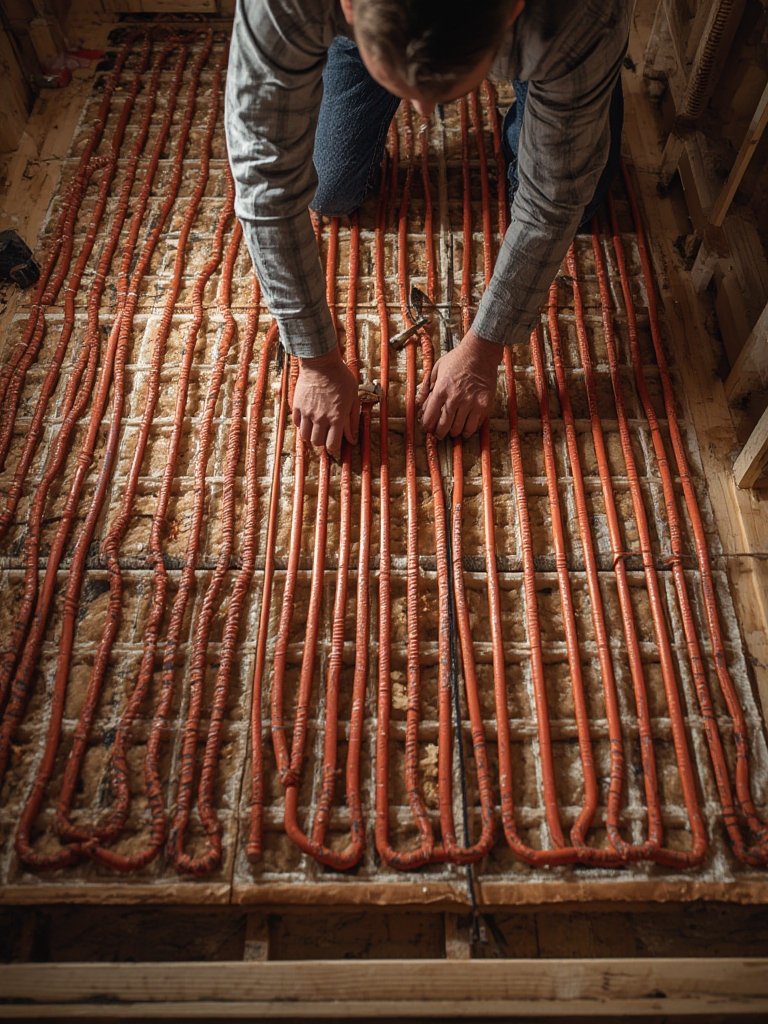
If you’re integrating with solar or planning for a net-zero home, consider backup heating sources, the right insulation layer, and annual professional maintenance for system longevity. For additional smart device integration concepts, check our guide to smart thermostats and home automation.
Advanced Analysis: Common Pitfalls, Cost Gaps, and Comfort Factors
While underfloor heating systems promise comfort and efficiency, there are genuine gaps in available consumer data and common pitfalls often overlooked by top-ranking competitor guides.
What Users Commonly Miss or Regret
- Unrealistic Cost Expectations: Most sources lack 2024-specific numbers for installation and maintenance. Hydronic systems are well known for higher upfront installation costs, especially on retrofits. Long-term, they can be cheaper to run, but only if well-insulated and well-zoned. Electric systems are easier to install but costlier to operate in large rooms.
- Energy Savings Can Vary Widely: While hydronic systems are generally more efficient, your savings depend on floor insulation, system size, and usage habits. Documentation on exact monthly savings versus traditional heating is still limited (source).
- Maintenance Blind Spots: Most guides provide little detail on long-term maintenance. Hydronic systems (water-based) require periodic professional checks for leaks, airlocks, and pump/filter upkeep. Electric systems are low-maintenance but, if disturbed, repairs mean lifting the floor—an expensive hassle.
- No Recent User Reviews or Complaint Data: Even the most in-depth market research lacks verified consumer complaint statistics post-installation (source).
- Scientific Data Gaps: Studies backing claims of better indoor air quality, allergy reduction, or superior comfort versus other heating are missing from leading sources. Even so, the comfort of even heat is universally cited by installers and users.
Comparison Table: Hydronic vs. Electric Underfloor Heating (2024)
| Feature | Hydronic | Electric |
|---|---|---|
| 2024 Market Share | 61.69% | 38.31% |
| Best Use Case | Whole house, new builds, large open spaces | Small areas, retrofits (bathrooms, kitchens) |
| Energy Efficiency | Higher — Lower running costs with renewables | Lower — More expensive for large areas |
| Installation Cost (2024 data) | Higher (no exact figures available) | Lower upfront |
| Maintenance | Annual, requires plumbing checks | Minimal; issues are disruptive to fix |
| Comfort & Air Quality | Even, silent warmth; claims of improved comfort but not scientifically verified | Similar to hydronic, less suitable for thick carpets |
| Smart Home Integration | Excellent, works with heat pumps/solar; easy IoT upgrades (source) | Good, zoning possible, some DIY systems |
Technological Advancements in 2024
Recent years have brought major smart home upgrades—now you can control floor zones, link to weather data, or set heating routines via mobile app or even voice. Underfloor systems pair especially well with heat pumps, solar systems, and other energy-efficient home upgrades (source). For broader inspiration, consider our guide to home automation.
Still undecided? Explore how pairing your radiant floor heating with a robust insulation upgrade or new smart thermostat can deliver even more value—similar to the approach in our energy-saving upgrades guide.

Conclusion
In 2024, underfloor heating systems deliver a blend of comfort, sleek design, and potential energy savings—especially when powered by renewables and managed through smart home tools. While the market is booming and solutions are maturing, users should approach with eyes open: installation and maintenance costs, variable efficiency, and a lack of published user complaint data mean you need to research carefully before choosing.
If you want a tailored, future-ready heating upgrade, examine your space, insulation, and energy sources first. For deeper dives into pairing these systems with other smart upgrades, check out more guides on this site—and let us know how your underfloor heating project goes!
FAQ
How much does underfloor heating cost to install in 2024?
There is no widely-published 2024 figure per square foot. Generally, hydronic systems cost more upfront than electric, but real prices vary dramatically by region, floor type, and contractor. Always get local, itemized quotes before deciding.
Will radiant floor heating lower my energy bills?
Hydronic systems can lower heating costs over time—especially with a well-insulated home and renewables. Electric systems cost more to operate, especially in large areas. Exact savings depend on usage habits and local energy costs.
Is it true underfloor heating is better for allergies?
While some installers and homeowners say radiant heat improves indoor air quality by reducing airborne dust, there are no recent scientific studies cited in major 2024 reports. The main benefit is less air movement compared to forced-air systems.
Does underfloor heating work with all flooring types?
It works best with stone, tile, or engineered wood. Thick carpeting or foam underlays can reduce heat transfer and system response times—always check flooring compatibility during planning. Need ideas? Visit our guides on LVP flooring and home renovations.
Can I control my underfloor heating with a smart home system?
Most modern systems easily integrate with smart thermostats, zoning controls, and IoT home automation. This lets you automate schedules, remotely monitor performance, and optimize for energy savings. For step-by-step setups, see our smart home improvement guide.
—